The Fascinating World of the Koryak
The Native People of Siberia and Their Ancestral Tradition with Amanita muscaria
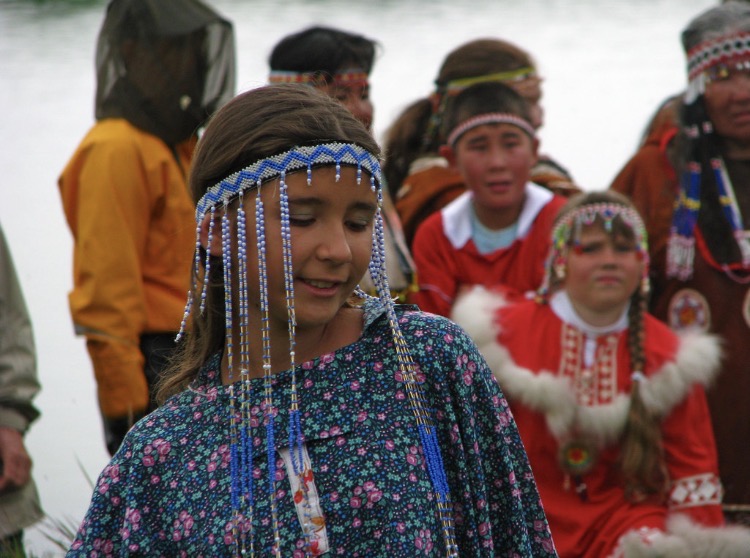
The Koryak live in the far northeast of Siberia, where volcanic mountains rise from frozen land and reindeer trails run through the tundra. There the Koryak people have lived in a continuous close exchange with their environment for thousands of years.
Their home on the Kamchatka Peninsula is a place where a cold wind often carries snow. It is also a place where human life is understood as part of a wider network of relationships.
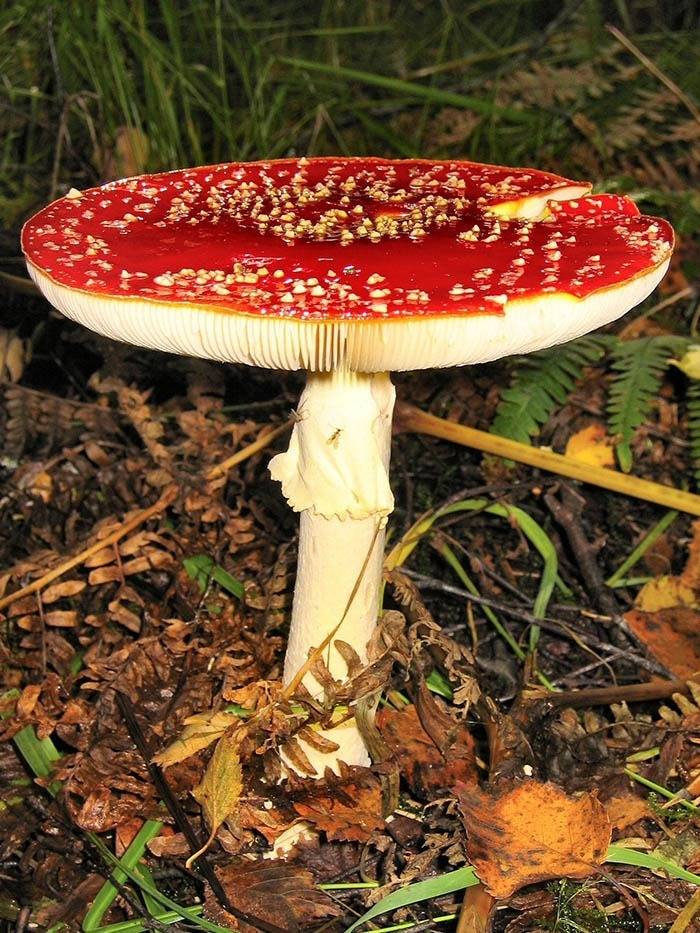
Amanita muscaria has a unique place within this world. According to Koryak mythology, the mushroom does not simply grow from the soil. It is said to originate from the saliva of the sky god Vahiyinin.
Whenever a drop of saliva falls from God toward the earth, and from that drop the mushroom appears. The bright cap with its white marks is understood as crystallised remnants of this divine substance. In this way the mushroom is not only a natural organism but connected to the divine.
This theme appears again in northern Europe. In the old Germanic world the red and white mushroom is linked to the foam from the mouth of Sleipnir, the eight-legged horse of Odin. Sleipnir moves between worlds, and wherever his foam touches the ground the mushroom emerges. It is striking that two cultures separated by immense distance share the same myth: the mushroom arises from the saliva of a divine force that travels between realms. Whether carried by Vahiyinin or by Sleipnir, Amanita muscaria becomes a sign of contact between our world and the divine.
Within the Koryak stories, Quikil, the Great Raven, discovers the strength of the mushroom when he tastes it and finds himself able to lift a whale. He asks that it remain accessible to humans so they may draw health and courage from it. The Koryak say that a man can work like three men when he eats a tiny bite of the mushroom. Through these stories the mushroom becomes woven into the cultural memory of the Koryak. It is called the „medicine that cures a 100 ailments.“
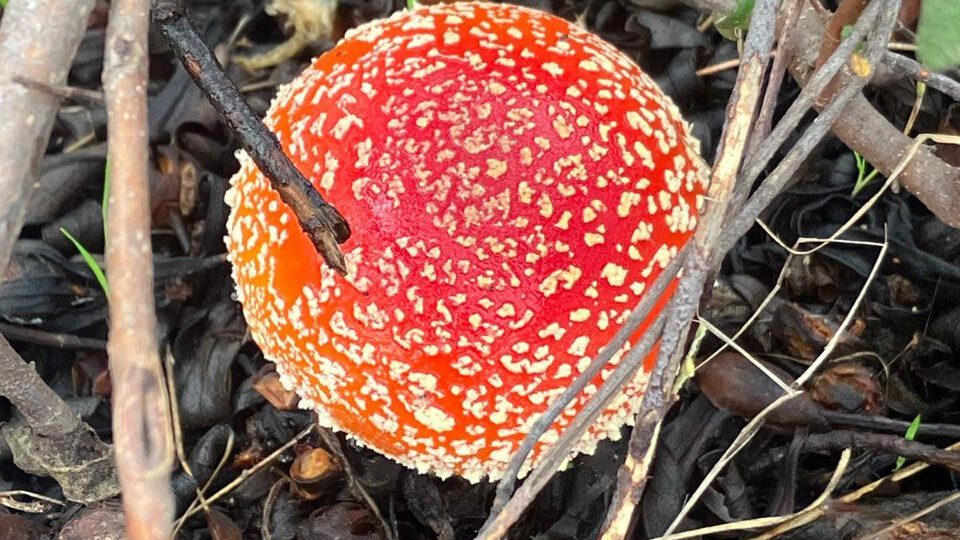
During winter a single dried mushroom could be the value of a living reindeer. Such an exchange reveals the extraordinary value Amanita muscaria held within the community. A reindeer meant survival. It could pull a sledge across frozen expanses. Its hide offered warmth. Its meat could sustain a household for many weeks. Its bones and sinews became tools and thread. A reindeer could also provide milk, one of the most reliable sources of nourishment in the Arctic climate. To offer such a treasure in exchange for one mushroom shows how highly the Koryak regarded the value of Amanita muscaria.
The value rested not in material usefulness but in its capacity to cure diseases.
The Koryak turned to shamans when healing was needed. The shaman moved between everyday perception and the deeper layers of reality. Through drum rhythms, chant and movement, the shaman entered a state in which communication with ancestors and spirits became possible. Amanita muscaria supported these journeys by widening the field of perception. Encounters with soaring reindeer or speaking animals were understood as meaningful events within that expanded awareness. Their messages guided the community.
Winter shaped the rhythm of Koryak life. Families gathered indoors while long nights covered the land. Stories of the Great Raven were retold. Blessings for the coming season were spoken. These gatherings reminded people that the world holds layers of meaning beneath its surface. In this atmosphere Amanita muscaria often stood for connection during the darkest time of the year.
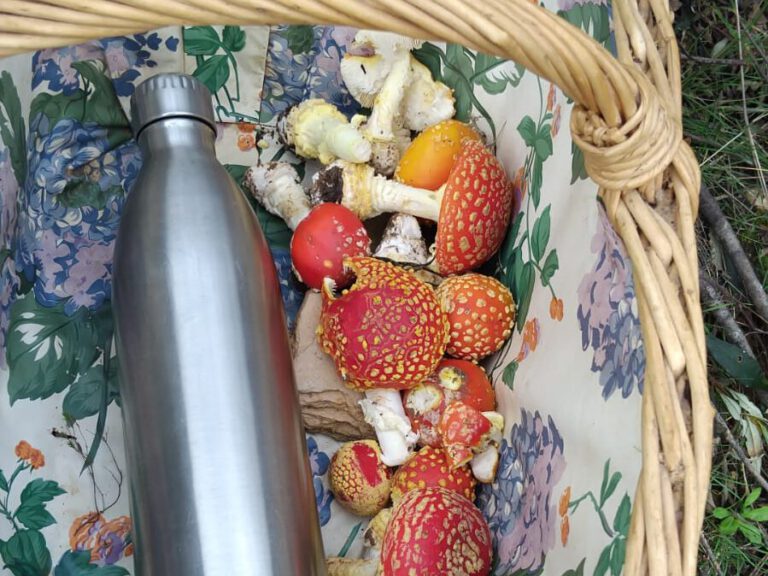
Trade was part of the seasonal movement. Families gathered mushrooms in late summer, dried them and carried them as they travelled. Exchanges for pelts or tools strengthened ties between groups who crossed paths only occasionally.
History later changed everything.
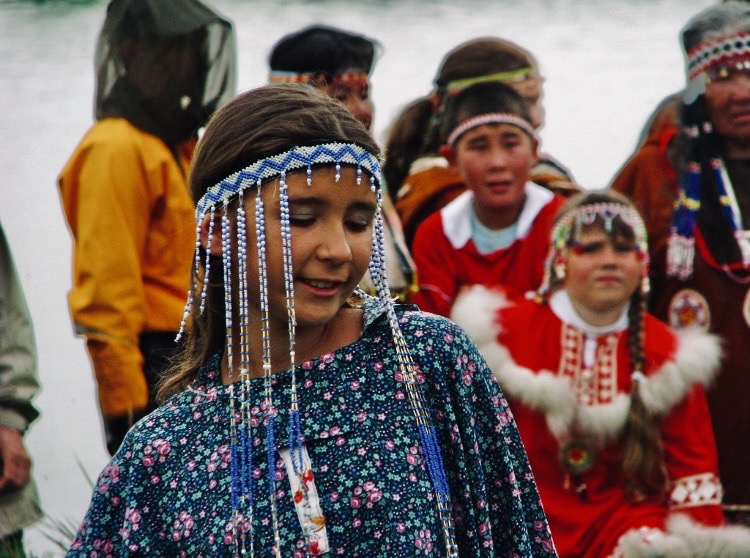
Russian expansion, missionary activity and Soviet policies weakened shamanic structures and reshaped daily life. Many rituals faded from public view. Yet the core of the culture survived in songs, stories and family memory. The worldview remained intact even when it could not be expressed openly.
Today a new interest in natural medicines and older traditions is rising worldwide. As people search for medical practices and alternatives to purely synthetic approaches, Amanita muscaria draws attention again. Much of the modern fear around the mushroom developed only recently. For generations Western culture portrayed it as dangerous without understanding traditional preparation methods or the contexts in which northern peoples worked with it.
This misunderstanding grew for several reasons. Knowledge about preparation declined as Indigenous cultures were displaced. Popular media simplified complex botany into a single symbol of warning. In some eras, the rise of pharmaceutical systems left little space for natural organisms that cannot be standardised or patented. As a result, many people inherited misinformation rather than understanding.
Modern research shows that preparation changes the chemistry of the mushroom significantly. Traditional cultures knew this long before scientific language existed. Their use of the mushroom was based on knowledge passed from generation to generation, embedded in ritual. What survives today is a new curiosity: a willingness to question old assumptions, a recognition that past knowledge was dismissed too quickly, and an awareness that nature holds more complexity than modern narratives allow.
Cultural revival efforts among the Koryak continue to grow. Younger people explore their heritage. Amanita muscaria appears as a reminder of a worldview in which the land itself is a companion and a guide.
For the author, the story of the Koryak offers a way of seeing by connection. It reflects a time when humans moved through the world with acute awareness of its many layers. And it shows that value is not always measured through material things. When one mushroom once carried the worth of an entire reindeer, it revealed what the Koryak understood: the force that nourishes our inner world shapes a community far more than anything else.